Collector’s Guide
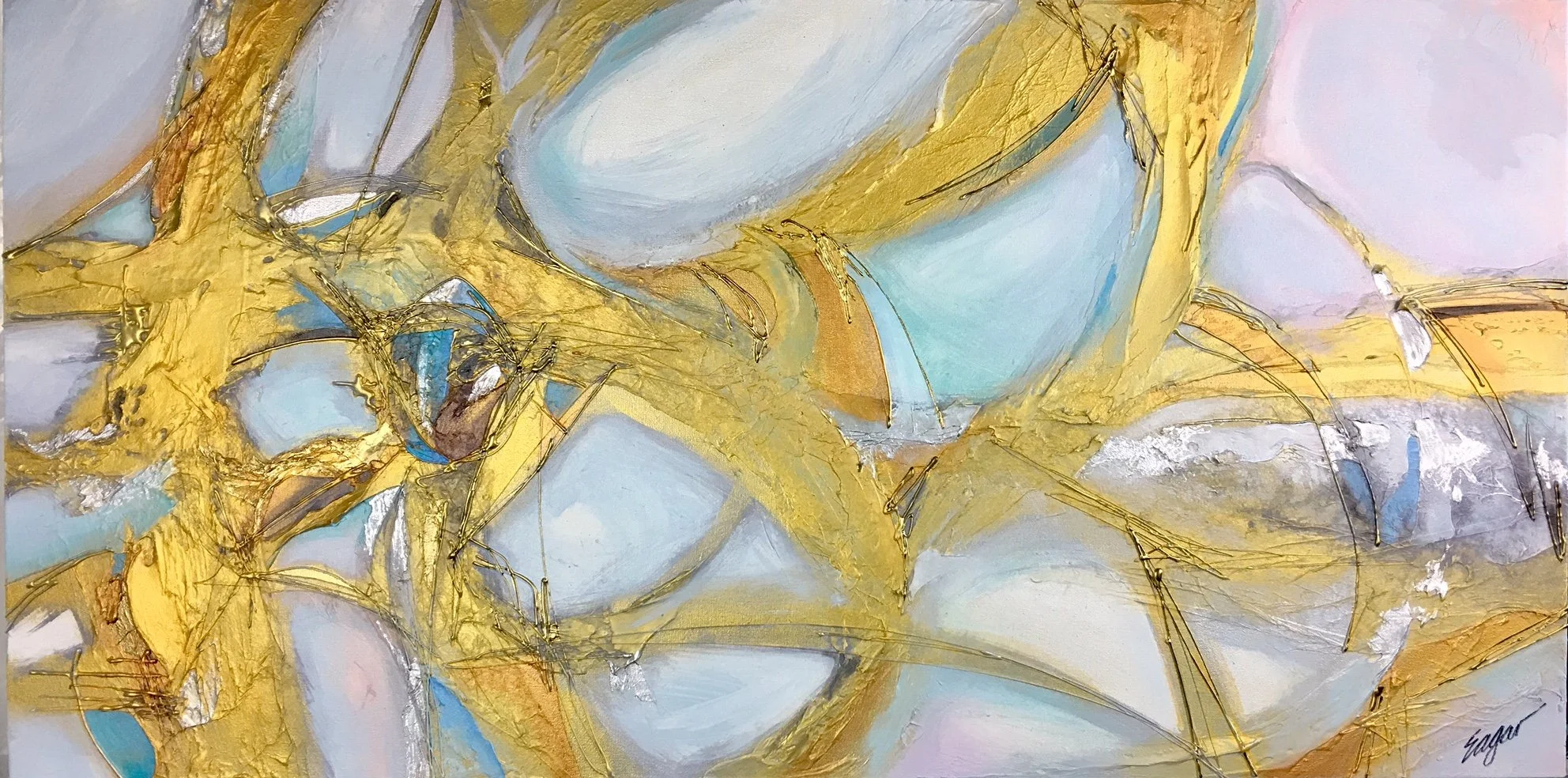
Original mixed media abstract painting by Clint Eagar, layered with sweeping gold leaf, soft pale blue, lavender, silver, and warm neutral tones. The textured surface and fine gestural lines create a sense of movement and luminosity, making this elongated abstract artwork ideal for luxury interiors, designer spaces, and statement walls above a sofa, bed, console, or dining area.
Collector's Guide to Original Fine Art, Custom Commissions & Legacy Collections
A Guide For Serious Collectors And Designers On Acquiring Original Fine Art And Building Legacy Collections For Private Or Professional Spaces
In This Guide
Introduction
Original fine art is more than decoration. It is a long-term visual decision that shapes the feeling of a home, office, hospitality space, corporate environment, or private collection.
The right artwork does not simply fill a wall. It creates presence. It carries the artist's hand, judgment, craftsmanship, material choices, and point of view. It becomes part of how a space is remembered.
This guide is written for collectors, interior designers, luxury homeowners, corporate art buyers, hospitality buyers, and clients considering custom commissioned artwork. Whether you are choosing an available original, comparing originals with giclee prints, planning a statement piece for a specific wall, or building a collection over time, the goal is the same: to choose artwork with meaning, quality, and lasting visual strength.
Clint Eagar Design is based on Florida's 30A in Santa Rosa Beach and works with collectors, designers, corporate buyers, and clients nationwide. The studio creates original fine art, custom commissions, dimensional wall art, wildlife artwork, coastal pieces, abstract compositions, futuristic works, and custom handmade frames designed to support the artwork as a complete visual object.
Who This Guide Is For
This guide is for buyers who want to make a more informed art decision.
It is especially useful for:
- Private collectors looking for original fine art with long-term meaning.
- Interior designers sourcing artwork for luxury homes and high-end interiors.
- Corporate art buyers selecting pieces for offices, boardrooms, lobbies, and client-facing spaces.
- Hospitality buyers looking for memorable artwork for resorts, restaurants, clubs, lodges, and guest environments.
- Luxury homeowners choosing artwork for a feature wall, private study, entryway, living space, or coastal residence.
- Collectors considering a custom commission created around a specific subject, story, space, or design direction.
Original artwork should do more than match a color palette. It should support the identity of the room, the collector, the brand, or the environment where it will live.
Why Original Fine Art Is Different
The art market includes many beautiful images: open-edition prints, giclee prints, digital reproductions, decorative wall art, trend-based pieces, and mass-produced artwork designed to coordinate with interiors.
Some of those options can be attractive and useful. But they are not the same as original fine art.
An original artwork is the actual object created by the artist. It carries the physical surface, texture, scale, material depth, composition decisions, revisions, brushwork, construction, and finishing choices that happened during the making of the piece.
That physical presence cannot be fully reproduced by a print.
In wildlife art, this difference is easy to see. A strong wildlife painting does more than show an animal accurately. It captures posture, weight, alertness, movement, environment, and the relationship between the animal and light. The piece should feel alive, not simply correct.
In coastal and marine work, the strength may come from atmosphere, water movement, light, birds, fish, shoreline, or the feeling of a place. The best coastal artwork does not rely on generic beach imagery. It interprets the region with a more personal and elevated point of view.
In abstract, dimensional, and futuristic artwork, the subject may be less literal, but the same standard applies. The work still needs structure, rhythm, material intelligence, scale, movement, and visual authority. A strong piece should hold attention from across the room and reward closer viewing over time.
Original fine art carries authorship. It has a clear maker, a clear creative history, and a specific physical existence. For serious collectors, designers, corporate buyers, and luxury homeowners, that distinction matters.
A reproduction may decorate a room. An original can define it.
Originals, Giclees, Limited Editions, and Prints
The language around art can be confusing, especially when buyers are comparing originals, giclees, limited editions, canvas prints, paper prints, and decorative wall art.
Understanding the difference helps you make better decisions.
Original Artwork
An original is a one-of-a-kind work created by the artist. It is not a copy, scan, or reproduction.
When you purchase an original, you own the actual artwork the artist made. That includes the physical surface, materials, scale, texture, color decisions, brushwork, construction, framing, and final presentation of that specific piece.
An original carries a type of presence that reproductions cannot fully duplicate.
Giclee Prints
A giclee is a high-quality reproduction created from a digital scan or photograph of an original artwork. A well-produced giclee can be beautiful, especially when printed with archival materials and quality inks.
Giclee prints can be a good option for buyers who love the image, mood, or style of an original but want a more accessible price point.
But a giclee is still a reproduction. It should not be described, valued, or priced as if it were the original artwork.
Limited Editions
A limited edition is a reproduction produced in a fixed quantity. It may be numbered, signed, or accompanied by documentation.
Limited editions can carry more collectible interest than open-edition prints, but the edition number alone does not automatically make a piece valuable. Value depends on the strength of the image, artist reputation, edition size, quality of production, market demand, and long-term collector interest.
Open-Edition Prints
Open-edition prints are reproductions without a fixed edition limit. They can be attractive and useful for design purposes, but they generally do not carry the same collectible weight as originals or carefully managed limited editions.
The key is transparency.
Whether you are buying an original, giclee, limited edition, or open-edition print, you should know exactly what you are purchasing. Each category can have a legitimate place in a home, office, hospitality space, or collection. But the pricing, expectations, and presentation should match what the piece actually is.
What to Look For in Original Fine Art
The first thing to look for in an original artwork is presence.
A strong piece does more than match a room. It holds attention. It feels intentional. It has authorship, craftsmanship, structure, and a point of view.
When evaluating an original piece, consider the following:
Subject and Meaning
Start with the subject.
Does it matter to you, your space, your brand, your client, or your collection?
For wildlife collectors, the subject may be a specific animal, species, habitat, sporting memory, conservation interest, or personal connection. For coastal collectors, the meaning may come from a region, waterway, bird, fish, shoreline, or atmosphere. For abstract and dimensional work, the subject may be movement, energy, texture, shadow, material, or mood.
The strongest pieces have a reason to exist beyond decoration.
Composition and Visual Strength
Good artwork should have structure.
The eye should move through the piece with purpose. There should be balance, contrast, rhythm, and a sense of control.
In representational work, technical skill matters, but accuracy alone is not enough. In abstract or dimensional work, freedom alone is not enough. The piece still needs discipline, proportion, and visual authority.
Surface, Texture, and Material Quality
Original art should reward close viewing.
Look for the physical decisions in the surface: brushwork, layering, tonal shifts, edge control, carved elements, built materials, dimensional depth, and finishing choices.
These details are part of what separates original fine art from printed decor.
Scale and Placement
Scale matters.
A large original can become the anchor of a living room, lobby, lodge, office, hospitality space, boardroom, or feature wall. A smaller piece may create a more intimate moment in a study, hallway, bedroom, private office, or collected gallery wall.
The right artwork should support the space without disappearing into it.
Medium and Construction
Ask what the piece is made from.
Is it acrylic, oil, mixed media, dimensional construction, canvas, panel, metal, wood, paper, or another material? Is the surface protected? How is it framed? How should it be lit, installed, cleaned, or preserved?
These questions matter, especially for coastal homes, high-light rooms, hospitality spaces, corporate interiors, and high-traffic environments. A serious artist or studio should be able to answer them clearly.
Choosing the Right Subject, Style, and Direction
Original art is most powerful when it carries meaning beyond decoration.
That meaning may come from the subject, location, architecture, personal memory, company identity, material palette, or emotional tone of the space.
A wildlife painting chosen because the animal has personal significance will feel different from one selected only because it matches the furniture. An abstract or dimensional piece designed for a corporate lobby will feel stronger when it reflects the company's energy, values, materials, or visual identity.
Wildlife and Sporting Art
Wildlife subjects have long been important to collectors who value nature, conservation, sporting culture, technical skill, and the emotional connection between animals and landscape.
Subjects may include elk, whitetail deer, mule deer, waterfowl, wild turkey, bear, mountain lion, African big game, coastal birds, marine life, or regional species connected to a specific place.
The best wildlife artwork captures more than appearance. It captures alertness, movement, tension, stillness, and the presence of the animal.
Coastal and Marine Art
For coastal collectors, place often becomes the subject.
The color of the water, the quality of the light, the movement of fish, birds, marsh, sky, and shoreline can connect a piece directly to a home or community.
In luxury coastal interiors, the strongest art does not feel generic. It should interpret the atmosphere of the place with refinement and individuality.
Abstract, Dimensional, and Futuristic Art
Abstract and dimensional artwork can be especially powerful in modern homes, corporate offices, hospitality environments, boardrooms, reception spaces, and feature walls.
These pieces can shape the way people experience a room without relying on literal imagery. The focus may be color, movement, shadow, texture, depth, material, rhythm, or scale.
For buyers who want something distinctive, dimensional or futuristic artwork can create a memorable identity for a space.
Corporate and Hospitality Art
For corporate and hospitality buyers, purpose matters.
Is the artwork meant to welcome clients, energize employees, create a memorable lobby moment, support a brand story, elevate a boardroom, or add sophistication to a guest environment?
The best pieces are not generic wall fillers. They are selected or commissioned to support the experience of the people who enter the space.
How to Commission a Custom Original Artwork
A commission is one of the most personal ways to collect original fine art.
Instead of searching for a finished piece that almost fits your vision, you work directly with the artist to create something specific: a subject, scale, style, color direction, story, material approach, or presentation designed around your space.
Custom commissions are especially useful for:
- Collectors who want a specific wildlife subject or meaningful animal.
- Homeowners designing around a feature wall.
- Interior designers sourcing artwork for a luxury residence.
- Corporate buyers creating artwork for a lobby, office, or boardroom.
- Hospitality projects needing a memorable visual identity.
- Clients who want artwork connected to a specific place, memory, brand, or story.
The Commission Brief
The process begins with a clear brief.
Helpful starting points include: what type of artwork you are considering, where the piece will be placed, what size or wall dimensions are available, what the artwork should feel like in the room, what colors or materials are present in the interior, whether the piece is for a private home or professional environment, and whether you have reference images, room photos, or subject ideas.
A good brief does not limit the artist. It creates the foundation for a stronger final piece.
Reference and Direction
Reference may include animal photographs, field experience, favorite species, regional landscape, interior finishes, architecture, brand colors, personal memories, or a desired mood.
For wildlife commissions, reference may focus on anatomy, posture, habitat, and emotional presence. For coastal work, it may involve light, water color, fish, birds, marsh, or regional atmosphere. For abstract, dimensional, or futuristic commissions, reference may come from architecture, materials, movement, technology, color, texture, or the feeling the space should create.
The more thoughtful the reference, the more intentional the finished artwork can become.
Scale, Framing, and Placement
A custom artwork should be planned with the wall, room, sightlines, lighting, furniture, and surrounding materials in mind. A large dimensional piece for a corporate lobby has different requirements than a wildlife painting for a private study or an abstract work for a luxury residence.
This is where working directly with the artist becomes valuable. Scale, proportion, color, depth, finish, framing, and installation can be considered before the piece is created.
Timing
Serious original artwork takes time.
Most commissions move through stages: initial conversation, project direction, reference review, composition or design planning, creation, finishing, framing or presentation, and final delivery.
This process protects both the client and the artist. It helps ensure the finished work is not only attractive, but appropriate for the space, meaningful to the buyer, and strong enough to hold its presence over time.
Framing and Presentation — Why the Finish Matters
A frame is not just packaging.
Framing and presentation are part of the artwork's final impact. The way a piece is framed, finished, lit, and installed affects how the viewer experiences it. A strong presentation completes the work. A poor presentation can weaken even an exceptional piece.
Custom Handmade Frames
Custom handmade frames offer something off-the-shelf framing usually cannot: proportion, color, material, depth, finish, and scale developed specifically for the artwork.
A frame built for a specific piece can support the composition, echo a tone from the palette, balance the depth of the canvas, or create a stronger relationship between the artwork and the room.
At Clint Eagar Design, many original works are paired with custom handmade frames developed in the 30A studio in Santa Rosa Beach. This allows the artwork and presentation to be considered together rather than separately.
Framing for the Space
Different spaces call for different presentation choices.
A lodge, cabin, or sporting collection may call for richer woods, natural textures, or stronger profiles that can stand beside stone, leather, and architectural detail. A coastal residence may need a cleaner, lighter, more refined frame that works with natural light and open interiors. A corporate office, boardroom, lobby, or modern residence may call for a minimal or architectural presentation that supports the artwork without distracting from it.
Dimensional and Statement Pieces
For dimensional and futuristic artwork, presentation becomes even more important. Depth, shadow, wall color, lighting, installation height, edge treatment, and viewing distance all become part of the experience. These works need to be considered with the room itself: the wall scale, traffic flow, surrounding materials, and the impression the piece should create from both near and far.
Practical Considerations
Materials matter. Coastal humidity, strong natural light, commercial interiors, hospitality environments, and high-traffic spaces all create different demands. Depending on the artwork and setting, collectors may need to consider UV protection, durable framing materials, proper backing, secure installation, and lighting. A serious artwork should be presented in a way that protects it and allows it to hold its presence for years.
How Original Artwork Pricing Works
Original artwork pricing depends on several factors, including size, medium, complexity, materials, framing, dimensional construction, availability, and whether the piece is an available original or a custom commission.
Because many Clint Eagar originals include custom handmade frames or dimensional presentation, pricing is provided by inquiry rather than listed as a standard product price. This allows collectors, designers, and corporate buyers to receive accurate information for the specific artwork or project they are considering.
Collectors may reach the studio with the title of an available artwork, a photo of the wall or room, approximate dimensions, a commission idea, a preferred subject or style, project timing, shipping location, and any interior design or placement details. From there, the studio can provide availability, pricing, timing, shipping information, and next steps.
For buyers considering a custom commission, the conversation begins with the artwork's purpose: what it should be, where it will live, and how it should feel in the space.
Building an Original Fine Art Collection Over Time
The collections that hold their meaning over decades are built with intention, not urgency.
A strong collection does not need to include everything at once. It needs clarity, quality, and thoughtful placement. A wall filled with too many pieces of similar weight can make none of them feel important. A space with fewer, stronger works — placed with purpose and breathing room — often feels more refined and memorable.
Build Around a Clear Direction
For early collectors, depth is often stronger than breadth.
Instead of buying across too many styles, subjects, and trends at once, consider building around a clear direction. That direction may be wildlife, coastal and marine subjects, abstract work, dimensional wall art, futuristic pieces, custom commissions, or a single artist's evolving body of work.
A focused collection creates coherence. It allows each piece to relate to the others while still standing on its own.
Consider the Space
For homes, corporate interiors, and hospitality environments, artwork should support the identity of the space.
A private study may need a different piece than a lobby. A boardroom may require a different visual language than a coastal living room. A lodge, resort, gallery wall, or executive office each has its own scale, lighting, and emotional tone.
The goal is not to fill every wall. The goal is to create moments that matter.
Let the Collection Evolve
A collection is not a permanent archive of everything you have ever purchased.
As taste develops, homes change, businesses grow, or design direction evolves, certain pieces may move to different rooms, be sold, gifted, reframed, or replaced by stronger work. This is part of collecting well. A collection should continue to earn its place. When you treat it as a living arrangement rather than a fixed inventory, you make better decisions over time.
Working Directly With Clint Eagar
There is a meaningful difference between buying artwork through a third party and working directly with the artist who created it.
Both can be valuable experiences. But direct access gives collectors, designers, and buyers the opportunity to understand the work from the person who knows it best.
When you work directly with Clint Eagar, the conversation can include the artwork's concept, materials, reference, surface, framing, scale, installation, and intended presence in a room. That matters because many Clint Eagar pieces are developed as complete visual objects — not only paintings, but works where surface, frame, dimensional detail, color, material, and presentation are considered together.
Clint's background spans fine art, wildlife subjects, abstract composition, dimensional design, product design, licensing, custom commissions, and artwork for private and professional environments. His classic abstract works from the 1980s have appeared in Sony's Black Monday and in international architectural settings, including Hong Kong International Airport.
That range allows collectors and designers to approach a project with more than one visual language available. A piece may be wildlife-focused, coastal, abstract, dimensional, futuristic, architectural, or entirely custom.
For commissioned artwork, the direct relationship is especially valuable. You are not simply ordering an object. You are asking the artist to interpret a subject, space, brand environment, memory, or emotional tone that matters to you.
Direct communication also strengthens provenance. You know who made the artwork, why it was made, how it was created, and how it connects to the artist's broader body of work. For serious collectors, that clarity matters.
Visiting the Gallery and Working Nationwide
Clint Eagar Design is located at 36 Uptown Grayton Circle in Santa Rosa Beach, Florida, on 30A. The gallery is available by appointment for collectors, designers, homeowners, and buyers who want to view available originals, discuss custom commissions, or explore artwork for a specific space.
Although the studio is based on 30A, Clint Eagar Design works with collectors nationwide. Artwork and commissions can be discussed remotely through photos, measurements, room references, design direction, and shipping details. For national collectors, this makes it possible to select or commission original artwork without being local to Florida.
For collectors, designers, and homeowners along 30A, Santa Rosa Beach, Destin, Grayton Beach, Seaside, WaterColor, Rosemary Beach, Alys Beach, and the surrounding Emerald Coast, the gallery also offers a local studio connection for original artwork, handmade framing, and custom pieces designed for luxury coastal interiors.
FAQ — Buying Original Fine Art and Custom Commissions
What is the difference between original art and a giclee print?
An original is the one-of-a-kind artwork created by the artist — the actual physical piece, not a copy or reproduction. A giclee is a high-quality print made from a scan or photograph of an original artwork. Giclees can be beautiful and collectible, but they are reproductions, not originals.
Does Clint Eagar Design offer custom commissions?
Clint Eagar Design accepts a limited number of custom commissions each year. Commissioned artwork may include wildlife, coastal, abstract, dimensional, futuristic, mixed-media, or space-specific pieces created for private homes, offices, hospitality spaces, corporate environments, and collections.
Why are original artwork prices not listed online?
Original artwork pricing depends on size, medium, materials, complexity, framing, dimensional construction, availability, and commission requirements. Because many originals include custom handmade frames or unique presentation details, pricing is provided by inquiry so collectors receive accurate information for the specific piece or project they are considering.
Can I commission artwork for a specific wall or room?
Many commissions begin with a wall, room, or specific design need. Collectors and designers may provide room photos, wall dimensions, interior finishes, color direction, and subject ideas so the artwork can be planned around the space from the beginning.
Does Clint Eagar Design work with interior designers?
Interior designers are welcome to contact the studio regarding available originals, custom commissions, framing, placement, scale, and artwork for luxury homes, corporate spaces, hospitality environments, and private collections.
Can corporate buyers or hospitality clients request artwork?
Clint Eagar Design works with corporate and hospitality buyers seeking artwork for offices, lobbies, boardrooms, reception areas, resorts, restaurants, clubs, and guest environments. Custom artwork can be developed around the identity, scale, and atmosphere of the space.
Does the studio ship artwork outside Florida?
Clint Eagar Design is based in Santa Rosa Beach on Florida's 30A and ships artwork to collectors nationwide. Shipping details depend on the artwork's size, framing, materials, and destination.
Are custom handmade frames available?
Many original works include or can be paired with custom handmade frames designed to support the artwork's scale, palette, materials, and final presentation. Frames are built in the Santa Rosa Beach studio alongside the artwork.
How do I start a commission conversation?
Start by contacting the studio with your subject idea, preferred style, room photos, wall dimensions, timing, and any reference images or design direction. The first step is a brief conversation about what the artwork should be, where it will live, and how it should feel in the space.
Begin a Commission or Request Details About an Original
Significant original fine art is rarely an accidental purchase. It is chosen with intention — for a specific home, collection, office, hospitality space, or design project.
Whether you are considering an available original or a custom commission, the strongest pieces begin with the right subject, scale, materials, framing, and placement.
Clint Eagar Design creates original artwork and custom handmade frames from its studio and gallery at 36 Uptown Grayton Circle in Santa Rosa Beach, Florida, on 30A. The gallery is available by appointment and works with collectors nationwide.
To request pricing for an available original, begin a commission conversation, or discuss artwork for a specific space, contact the studio with your artwork title, project idea, room details, or design direction.